Ted Hughes was a British poet and children’s writer who was appointed as the Poet Laureate in 1984. His earlier poetic work is rooted in nature and often depicts the innocent savagery of animals as metaphors for human experience.
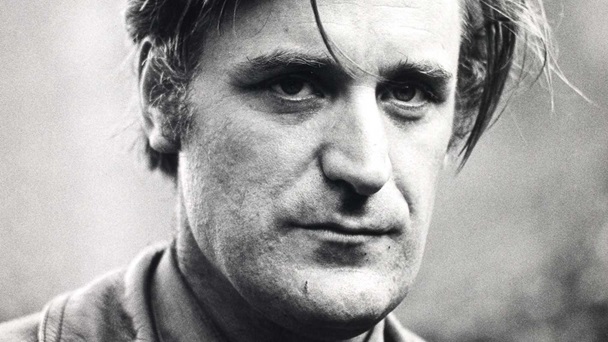
Hughes’ work confronts many themes – with questions surrounding spirituality and higher power being inherent throughout the poet’s career. Andy Armitage (2016) states that: ‘myths were, to Hughes, a record of great visionary experiences; they told the story of the shaman poet’s journey into the underworld of the unconscious to gather its healing energies, this being the images and symbols of myth, to heal himself and his tribe.’
Hughes believed that ‘the philosophical and intellectual ideals of Western civilisation over the last 300 years had alienated man from his inner life […] the “human spirit” was not a “mechanical business of nuts and bolts” and could not evolve into such “just because a political or intellectual ideology requires it to”’ (Armitage, 2016). The ability to look beyond the literal image and focus inwards is a vivid concept within Hughes’ work.
A preoccupation with shamanism commenced with Hughes’ interest in Robert Graves’ The White Goddess (1959), published in 1948, after he was given a copy of the text at the age of eighteen. The book celebrates the sacredness of life and death and the connection between human and divine nature. This influence is evident in Hughes’ own work. Hughes, like Graves, believed that since the Bronze Age, poetry had become intellectualised and had declined until the Romantics began to re-establish a connection between man and nature. The poet believed that art was a natural healing process, and was the psychic equivalent of the immune system. Armitage (2016) states that Hughes:
Compared the role of the poet to that of the shamanic healer of primitive tribes who descended into the underworld to recover a sick man’s soul, or to perform some task to resolve a crisis afflicting his tribe. Essentially, he understood the poet as acting as a quasi-religious function in providing a healing image that reconnected man with his inner self and nature.
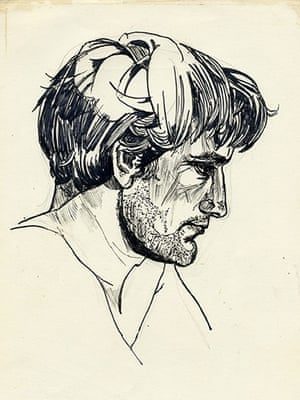
Hughes saw myths as visionary, that they brought a sense of order and balance to the opposing forces of the inner and outer worlds. He argued that they contain cathartic psychic properties, utilising the power of myth and nature in order to provide some sense of healing in his own life. The poet became interested in the greater forces beyond what we can comprehend – he was intrigued by horoscopes, even writing a letter to his sister in one circumstance about his compatibility with fellow poet Sylvia Plath. Hughes states that ‘she is Scorpio Oct 27th moon in Libra, last degrees of Aries rising and has her Mars smack on my sun, which is all very appropriate’ (Reid, 2007, p39). According to the BBC’s ‘Stronger than Death’ (2015) documentary on the poet, Hughes would attempt to guess the launch dates of his books through planetary alignments, and in some circumstances attempted seances through Quija boards – ‘we worked the Ouija board – the glass turned upside down on a smooth table in a ring of the letters of the Alphabet’ (Reid, 2007, p87).
Through a mythical backdrop, Hughes offered his audience an insight into the intimate moments within his life. The poet employed mythical beings to act as metaphorical representations of both himself and his creative thought process throughout his career. Myth allowed the poet to disassociate himself from reality, and delve into tales of transformation and renewal in order to progress creatively.
Written by Anna Stevenson.
 Ted Hughes: Art in the Making
You must be logged in to post a comment.